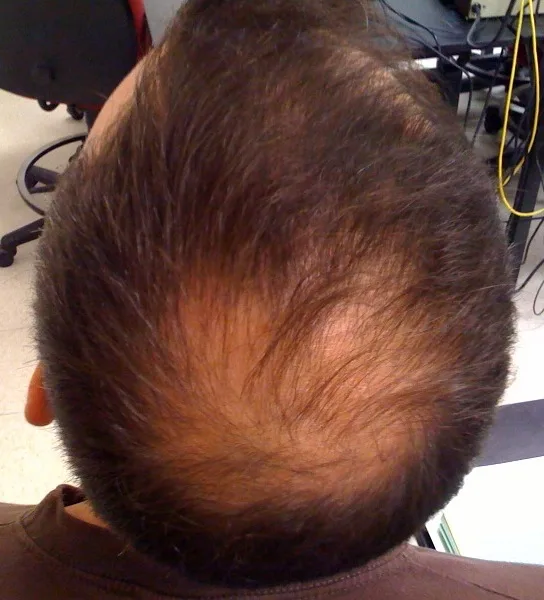
I started noticing my hair thinning when I was 22. The temples were going first, in that recognisable pattern that anyone who's been there will know. I spent the next decade learning what I should have known at 22. This is the conversation I wish I could have had with myself then. If you're in that position now, young, early in the process, scared, googling at 2am, maybe some of this is useful.
The first thing I wish I'd known: this is going to take more emotional energy than you think. The early stages of hair loss are paradoxically often harder than the later stages because of the uncertainty. You don't know how fast it's going. You don't know if treatment will work. You don't know if you'll end up at Norwood 3 or Norwood 7. Every photograph becomes evidence. Every interaction with strangers becomes calibration. Every comment about your appearance, well-intentioned or otherwise, lands differently. Accept that this is going to occupy mental real estate for years even if you don't want it to. Plan for that.
The second thing: start treatment earlier than you think you need to. The single biggest mistake young men make is waiting until significant hair has been lost before starting medical therapy. Minoxidil and finasteride work substantially better as preventative treatment than as restorative treatment. The follicles you save now are easier to keep than the follicles you've lost to recover. If you're 22 and noticing thinning with a family history of male pattern hair loss, having the conversation with a dermatologist about starting treatment is appropriate. Waiting until you're at Norwood 3 to start treating means you'll spend years trying to recover what you could have prevented.
The third thing: be honest with yourself about your priorities. Hair loss treatment requires ongoing commitment. Topical minoxidil twice daily. Possible side effects from finasteride. Long-term medication use. Some people are temperamentally suited to this; others aren't. There's no shame in either position. The patient who tries to maintain a treatment regimen they aren't actually committed to has the worst of both worlds, costs and inconvenience without the benefits of consistent application. Be honest about whether you'll actually do what's required.
The fourth thing: the wellness industry is going to try to sell you nonsense. Caffeine shampoos. Biotin supplements. Hair growth oils. Massage devices. "Natural" treatments that promise to match minoxidil. The amount of money you can spend on things that don't work is essentially unlimited. The treatments that actually work are well-established, relatively inexpensive, and don't have venture-backed marketing campaigns behind them. If something seems too good to be true, particularly something that promises dramatic results without side effects, assume it's marketing rather than medicine.
The fifth thing: your hair loss isn't going to define you the way you currently think it will. This is the hardest one to convey because at 22, you genuinely cannot believe it. Your hair feels load-bearing for your identity, your attractiveness, your social standing, your sense of self. Twenty years later, you'll look back and recognise that the relationship between hair status and life outcomes is much weaker than you currently feel it to be. Successful, attractive, loved, happy men exist at every Norwood level. The catastrophic narrative you're building in your head about what hair loss means is wrong. It doesn't mean what you think it means.
That said: doing what you can to treat it isn't superficial or weak. Taking care of your appearance is a legitimate priority. Wanting to look how you want to look isn't shallow. The two things, accepting that hair status doesn't determine your life and actively treating it, coexist. You don't have to choose between fighting the hair loss and being psychologically healthy. Both are possible. Both are reasonable.
The sixth thing: find your information sources carefully. The internet hair loss community is a mix of useful information and unhelpful catastrophising. Forums where men compare themselves obsessively, panic about progression, and reinforce each other's anxieties aren't doing you any favours. Find the resources that combine real information with realistic perspective. The doctors and writers worth reading are the ones who can give you both useful technical guidance and grounded emotional framing.
The seventh thing: you have more time than you feel like you have. Hair loss is a slow process. The decisions you make in your 20s about treatment will affect your appearance in your 30s and 40s. You don't have to decide everything immediately. You don't have to commit to surgical interventions when medical therapy hasn't been tried. The pressure to act dramatically and immediately is mostly internal, and it's mostly wrong. Take a few months to research properly, get multiple opinions, and make decisions you'll be comfortable with at 35 looking back.
The eighth thing: the future is brighter than the present. Treatment options at 22 (when I was figuring this out) were minoxidil, finasteride, and hair transplantation. Treatment options at 42 (where I am now) include all of those plus emerging cell therapies, JAK inhibitors, exosomes, and the genuine possibility of meaningful breakthroughs by 2030. If you're 22 today, you may benefit from treatments in your 30s and 40s that don't yet exist. Don't make permanent decisions based on the assumption that 2026 options are the final options.
The last thing I wish I'd known: you're not alone. Tens of millions of men are dealing with this same process, in the same age range, asking the same questions, having the same anxieties. You don't have to navigate it in isolation. Find your people, whether that's a dermatologist you trust, a community that's grounded and helpful, friends who know about your situation, or a partner who supports you. The shared difficulty becomes much more manageable when it isn't private.
If you're 22 and reading this with anxiety: take a breath. You have options. Start with a real dermatology consultation, not a Reddit thread. The decade ahead is going to be challenging in this specific area but the challenges are workable. The version of you in 2036 will mostly wish you'd been kinder to yourself during this process rather than wishing you'd handled the hair loss differently. That's the thing the 22-year-old version of me really needed to hear.
Discussion (4)
James_NW3
5 months ago
I'm 23 and this hit. The 'find your information sources carefully' point particularly. The communities I've been spending time in are not actually helping me.
Marcus T.
5 months ago
Started fin at 22 reluctantly. Twenty years later my hair is still there. The single best decision I made in that era of my life. Wish I'd been less reluctant.
AnonymousDad
5 months ago
Sharing this with my son who's 19 and starting to thin. Wish I'd seen this written when I was his age, would have changed how I approached the next decade.
RegrowthCurious
5 months ago
The fifth point, that hair status doesn't determine your life, is the part I'm still working on accepting at 34. The 22-year-old me genuinely couldn't have heard it.
Join the discussion
Free account. Read, like, save, and comment on every article.