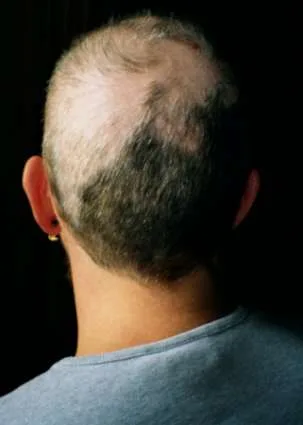
Trichotillomania: Hair Loss From an Underrecognised Mental Health Condition

Trichotillomania is a body-focused repetitive behaviour disorder classified in the DSM-5 alongside skin-picking and similar conditions. It involves recurrent hair pulling resulting in hair loss, with patients typically aware of but unable to control the behaviour. Estimated prevalence is approximately 1 to 2% of adults, with onset commonly in adolescence. The condition is dramatically underdiagnosed because patients are often reluctant to disclose pulling behaviour.
Diagnosis often comes through trichoscopy showing characteristic findings, broken hairs at varying lengths, hair shafts with longitudinal fissuring, and absence of the classical exclamation mark hairs seen in alopecia areata. The pattern of loss is often geographically defined, areas the patient can easily reach during pulling episodes. Some patients pull from specific regions (eyebrows, eyelashes, pubic hair); others target scalp hair primarily.
Treatment is primarily behavioural rather than dermatological. Habit reversal therapy, a specific cognitive-behavioural protocol, has the strongest evidence base. N-acetylcysteine (NAC) supplementation at 1200 to 2400mg daily has some randomised trial evidence for reducing pulling urges, though effects are modest. SSRIs and other antidepressants are sometimes used but evidence is weaker. The most important first step is non-judgmental recognition, patients sometimes maintain the behaviour for decades without anyone offering supportive intervention.
References & Clinical Data
- Trichotillomania: diagnosis and treatment , Grant JE, Chamberlain SR. (American Journal of Psychiatry, 2016)
- N-acetylcysteine for trichotillomania: randomised trial , Grant JE, et al. (Archives of General Psychiatry, 2009)
- Trichoscopy in trichotillomania: diagnostic features , Rakowska A, et al. (International Journal of Trichology, 2014)