The Thyroid Hair Paradox: When Normal Blood Tests Mask Severe Follicle Loss
Standard safety profile; consult a board-certified dermatologist.
Evidence-based therapy under active evaluation; review with your physician before altering your routine.
A blood test indicating a thyroid stimulating hormone level of 4.1 mIU/L will generate an automated normal flag on almost every laboratory report in North America. For a patient who has watched forty percent of their ponytail volume disappear over nine months, that reassuring green metric is often a clinical dead end.
The human hair follicle is one of the most metabolically demanding micro-organs in physiology. While cardiac muscle and hepatic tissue can function adequately across a broad spectrum of circulatory thyroid hormone, follicular matrix cells begin to falter long before a patient meets the official textbook definition of systemic endocrine failure. This diagnostic grey zone, termed subclinical hypothyroidism, is quietly reshaping how dermatologists evaluate chronic diffuse shedding.
The Flawed Architecture of the Normal Range
The central conflict stems from how medicine defines a healthy thyroid. For decades, standard diagnostic panels have relied on a reference range for thyroid stimulating hormone, or TSH, that spans from 0.45 to roughly 4.5 mIU/L. In 2004, a consensus panel led by Martin Surks published a landmark analysis in JAMA examining the population distributions of these numbers. Surks pointed out that while the broad spectrum reflects population averages, data from the National Health and Nutrition Examination Survey revealed that over ninety percent of disease-free individuals exhibit a TSH below 2.5 mIU/L.
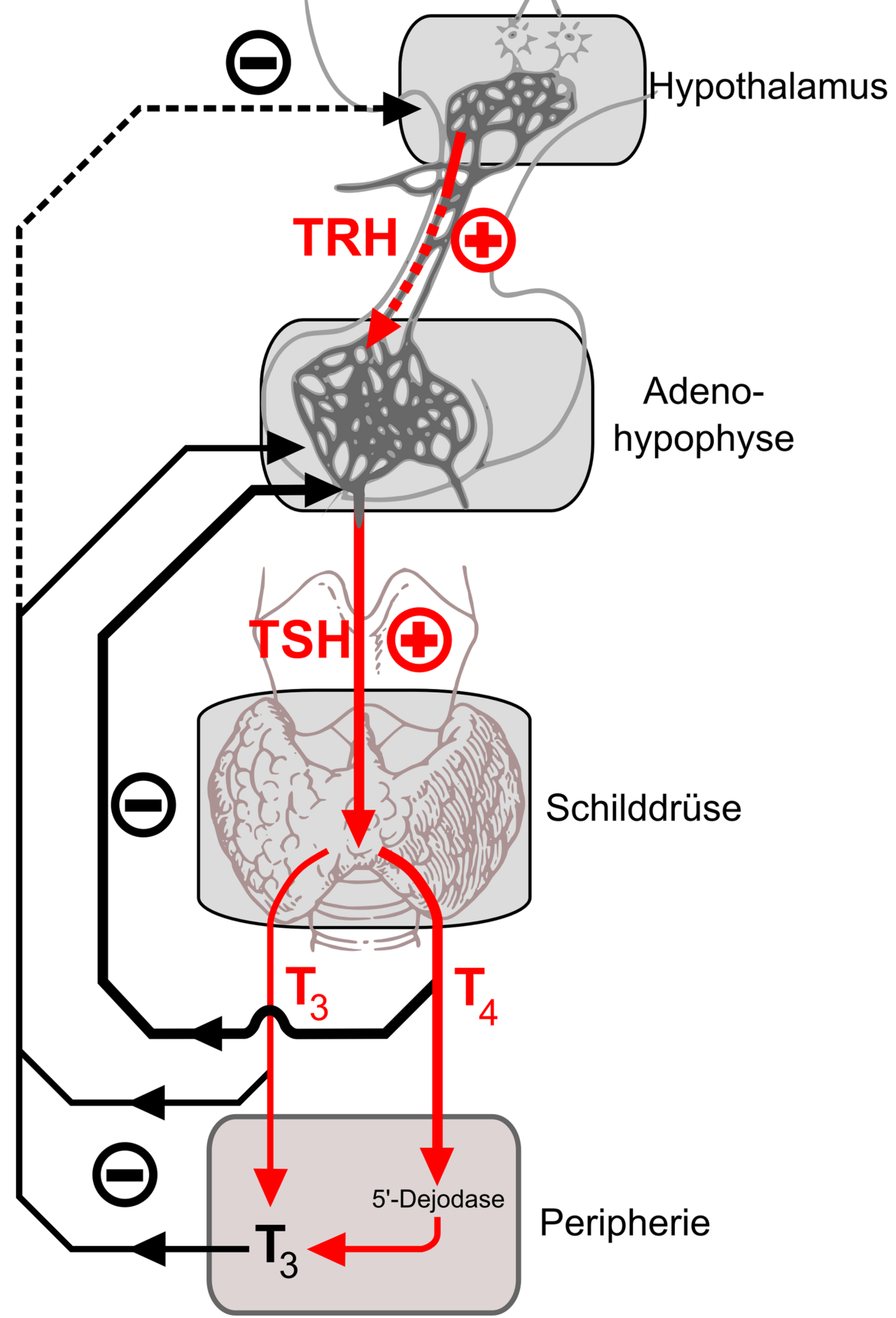
When TSH drifts between 2.5 and 4.5 mIU/L, circulating free thyroxine (T4) and triiodothyronine (T3) levels often remain technically within standard reference boundaries. The pituitary gland, however, is already shouting at the thyroid to work harder.
Systemic organs tolerate this compensatory state without producing overt lethargy, cold intolerance, or severe weight gain. The scalp, by contrast, registers the deficit immediately. Rapidly dividing matrix keratinocytes demand intense mitochondrial respiration to maintain structural protein synthesis during the active growth phase, known as anagen. Even a marginal dip in cellular hormone availability acts like a brownout in a power grid, forcing follicles to shut down non-essential production lines.
What Happens Inside the Follicle Matrix
The direct biological link between thyroid hormones and the hair cycle was mapped in definitive detail by Nina van Beek and Ralf Paus in a 2008 study published in The Journal of Clinical Endocrinology and Metabolism. Working with microdissected human scalp hair follicles cultured ex vivo in serum-free systems, the investigators tested the cellular impact of physiological doses of thyroid hormones.
The findings contradicted the longstanding belief that thyroid hormones merely play a passive, permissive role in skin health. Van Beek demonstrated that thyroxine directly stimulates the proliferation of hair matrix keratinocytes, upregulates intra-follicular melanin synthesis, and significantly extends the duration of anagen. When hormone levels decline, the follicle prematurely triggers catagen, the apoptosis-driven regression phase.
At a molecular level, the dermal papilla contains specific thyroid hormone receptor isoforms, predominantly TR-alpha1 and TR-beta1. When circulating T3 and T4 drop below the follicle's operational threshold, gene transcription for key growth factors drops alongside them. The follicle slips into telogen, resting for three months before expelling the hair shaft. Because this occurs uniformly across the scalp rather than in localized patches, the result is diffuse thinning across the entire crown and temporal areas.
Methodological Flaws in the Clinical Evidence
Despite these clear molecular pathways, clinical trials linking subclinical thyroid failure to diffuse alopecia often suffer from poor design. In 2013, an observational study by Betsy Joseph and colleagues in the International Journal of Trichology evaluated thyroid abnormalities among one hundred women presenting with diffuse telogen shedding. While the authors reported elevated rates of subclinical hypothyroidism in the shedding cohort compared to controls, the trial exposed several methodology pitfalls common to hair restoration research.
First, the study relied on cross-sectional observational data without longitudinal tracking. The researchers did not employ high-resolution phototrichograms to measure changes in terminal hair shaft diameter versus cosmetically irrelevant vellus fuzz. Second, the trial failed to adequately control for ferritin, zinc, and concurrent androgen sensitivity. A low thyroid state often slows gastrointestinal transit and reduces stomach acid production, which directly hampers iron and nutrient absorption. As a result, separating whether the primary driver of shedding is thyroid starvation or secondary iron depletion remains difficult in trials that lack rigorous multivariate controls.
Third, pharmaceutical trials assessing thyroid replacement often lack randomized, double-blind, placebo-controlled cohorts. Because synthetic levothyroxine is long off-patent and costs mere pennies per pill, major pharmaceutical houses have zero financial incentive to fund multi-million-dollar randomized controlled trials measuring scalp hair density with clinical precision.
The Treatment Trap and Biological Realities
When an open-minded physician does agree to treat a subclinical TSH reading of 3.8 mIU/L with synthetic levothyroxine, patients often encounter a paradoxical clinical shock. Between weeks six and eight of therapy, hair shedding frequently intensifies.
This secondary shed occurs because the rapid restoration of follicular metabolism synchronizes the hair cycle. Dormant telogen follicles are abruptly forced to wake up and start producing a new anagen hair shaft beneath the surface. As that new hair emerges, it mechanically ejects the resting club hair sitting above it. Without clear clinical counseling, panicked patients often abandon the drug precisely when the biological reset is taking place.
Therapy is not without friction or risk. Levothyroxine has a razor-thin therapeutic window. Small dosing errors can shift a patient from mild hypothyroidism directly into subclinical hyperthyroidism, presenting with palpitations, acute anxiety, and accelerated bone mineral density loss. Furthermore, the drug requires strict compliance: it must be swallowed on an empty stomach with plain water at least thirty to sixty minutes before coffee, breakfast, or calcium supplements, which bind the active molecule and prevent intestinal absorption.
The Cost and Future Timeline
Levothyroxine remains one of the cheapest prescriptions in medicine, rarely exceeding ten to twenty dollars per month without insurance. Yet using systemic hormones to treat an isolated scalp issue represents an imperfect tool.
The future of the field lies in localized thyroid receptor modulators. Laboratory teams in Europe and Japan are currently investigating topical synthetic thyromimetics engineered to activate follicle TR-beta receptors without entering the bloodstream in quantities sufficient to trigger cardiac arrhythmias or pituitary