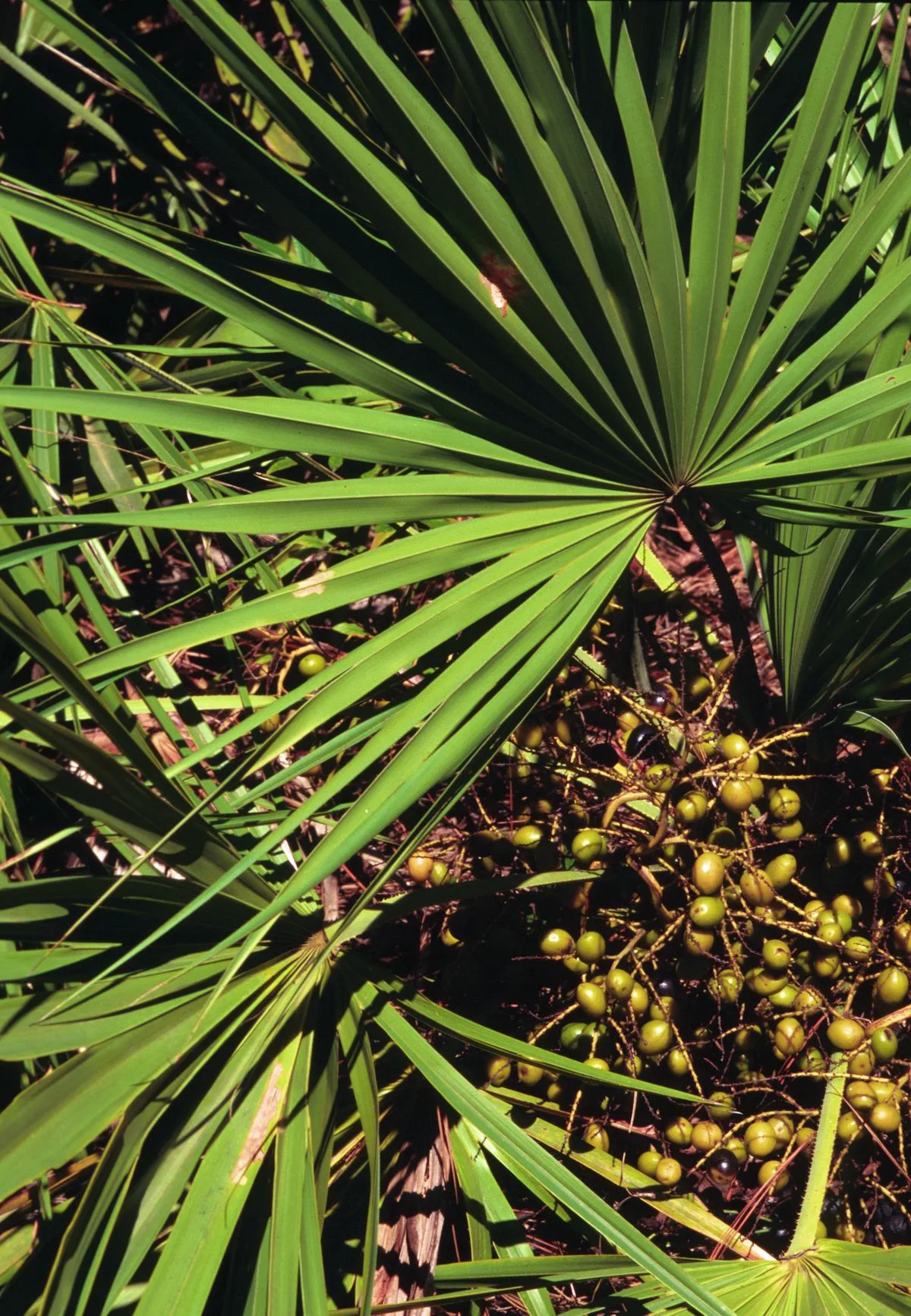
Saw Palmetto for Hair Loss: A Mechanism Without Clinical Evidence

Saw palmetto (Serenoa repens) is the most widely sold botanical for hair loss, included in dozens of supplement formulations marketed for both men and women. The mechanistic case for its use is real: saw palmetto extract inhibits 5-alpha reductase in vitro, the same enzyme target as finasteride and dutasteride. The clinical translation, however, has been disappointing relative to the marketing.
A 2024 systematic review of saw palmetto for androgenetic alopecia identified seven randomised controlled trials with usable data, totaling 458 patients. The pooled effect was a 3.4 additional hairs per cm² improvement versus placebo, statistically significant but roughly one-fifth the effect of 5% minoxidil and approximately one-seventh the effect of finasteride 1mg in equivalent populations. The included trials showed substantial heterogeneity in extract preparation, dosing, and outcome measurement.
The most defensible position is that saw palmetto produces a small but measurable effect, likely real, certainly modest. It's reasonable as part of a multi-modal approach for patients who want a natural component alongside established treatments. It's not a substitute for finasteride or minoxidil if the goal is meaningful regrowth. The widespread inclusion in expensive 'comprehensive' hair supplements (priced at £50+ per month) is not supported by the magnitude of effect that saw palmetto actually delivers.
References & Clinical Data
- Saw palmetto for androgenetic alopecia: systematic review and meta-analysis , Evron E, et al. (Journal of the American Academy of Dermatology, 2024)
- Saw palmetto extract inhibits 5-alpha reductase in vitro , Marks LS, et al. (Prostate, 2001)
- Comparative effectiveness of botanical 5-AR inhibitors in androgenetic alopecia , Prager N, et al. (Journal of Alternative and Complementary Medicine, 2018)