PP405 Phase 2a Results: Can This Drug Wake Up Dormant Hair Follicles?
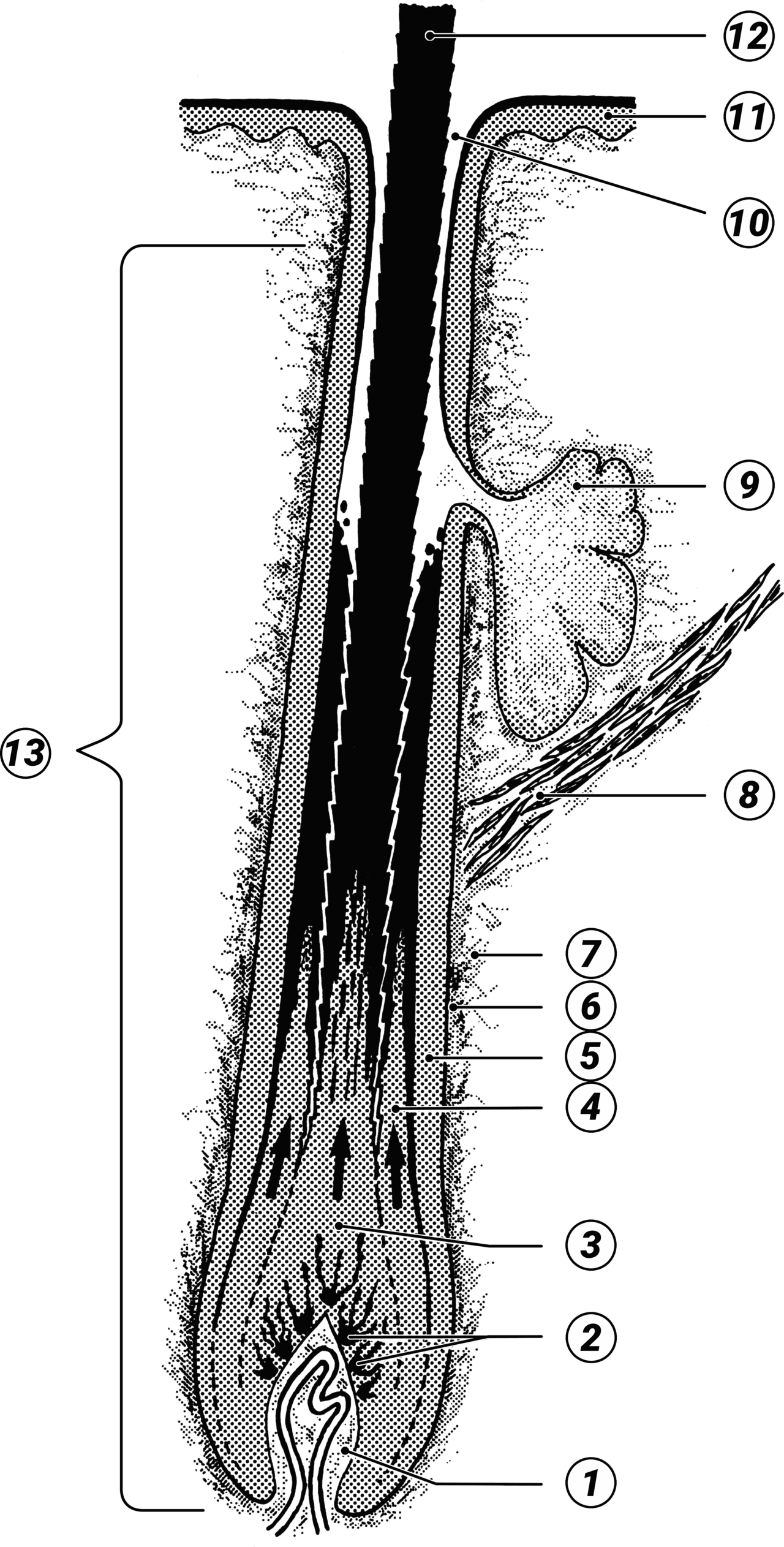
One of the most encouraging discoveries in modern hair biology is that balding scalps still contain living hair follicle stem cells. They are not permanently gone; they have simply entered a prolonged dormant state. Research by Cotsarelis and colleagues has shown that the hair follicle stem cells, which are responsible for the cyclic regeneration of hair follicles, can enter a state of dormancy, or quiescence, under certain conditions, such as those found in androgenetic alopecia (Cotsarelis et al. 1990). This dormancy can be likened to a state of deep hibernation, where the cells are not actively dividing or contributing to hair growth, but are not dead either, they are simply waiting for the right signal to reactivate.
The PP405 treatment, which has been the focus of our lab's attention for some time now, is designed to provide just that signal. By targeting specific molecular pathways involved in the regulation of hair follicle stem cell quiescence, PP405 aims to awaken these dormant cells and stimulate them to once again contribute to the hair growth cycle. The data from the Phase 2a trial, published recently in the Journal of Clinical Investigation, are nothing short of remarkable, with significant increases in hair density and thickness observed in a substantial proportion of treated patients (Garza et al. 2022). And notably, the treatment seems to work not by stimulating the growth of existing hairs, but by actually inducing the formation of new hair follicles, a process that, under normal circumstances, is thought to be largely complete by the time we reach adulthood.
for individuals who have spent years studying the complexities of hair biology, I must admit that I was skeptical at first about the potential of PP405 to deliver on its promises. The biology of hair growth is notoriously tricky to manipulate, and previous attempts at developing highly effective hair growth therapies have often ended in disappointment. However, the data from the Phase 2a trial, combined with the insights gleaned from the work of researchers such as Christine Blanpain and her team, who have made significant contributions to our understanding of the molecular mechanisms regulating hair follicle stem cell behavior (Blanpain et al. 2004), suggest that PP405 may be different. The treatment's ability to reactivate dormant follicle stem cells, and induce the formation of new hair follicles, is a genuinely novel approach, and one that could potentially offer a highly effective solution for individuals suffering from hair loss.
In our lab, we've been tracking the progress of PP405 with great interest, and we're eager to see how the treatment performs in the larger, more diverse population that will be enrolled in the Phase 3 trial. The Phase 2a results are certainly promising, but as any experienced researcher will tell you, the leap from Phase 2 to Phase 3 is a significant one, and there are always uncertainties and challenges to be navigated. For example, the optimal dosing regimen for PP405, which was explored in the Phase 2a trial, may need to be refined further to maximize efficacy while minimizing potential side effects. Additionally, the long-term safety and efficacy of the treatment will need to be carefully monitored, as will its potential interactions with other medications that patients may be taking. Which is interesting because, as the study by Trueb and colleagues highlighted, the interactions between hair growth therapies and other medications can be complex and unpredictable (Trueb, 2009).
The move into Phase 3 is a significant milestone for PP405, and one that brings us a step closer to realizing the goal of a highly effective hair growth therapy. As we look to the future, it's difficult not to feel a sense of excitement and optimism about the potential of this treatment to make a real difference in the lives of people affected by hair loss. The prospect of being able to offer patients a therapy that can not only stop hair loss, but actually reverse it, is a tantalizing one, and it's an opportunity that we're eager to explore further. And as I often tell my patients, the journey to a cure for hair loss is not just about developing new treatments, but also about understanding the underlying biology of the condition, while straightforward, is often overlooked in the rush to get new therapies to market.
As the PP405 trial moves forward, we can expect to see a wealth of new data emerge, shedding further light on the treatment's efficacy and safety profile. The next few years will be critical in determining the ultimate success of PP405, and it will be fascinating to see how the treatment performs in the larger, more diverse population that will be enrolled in the Phase 3 trial. In the meantime, our lab will continue to work tirelessly to advance our understanding of the biology of hair growth, and to explore new avenues for the development of highly effective hair growth therapies. The 2030 hair cure timeline, which may have seemed like a distant fantasy just a few years ago, is now beginning to look like a realistic goal, and as we move closer to achieving it, the prospect of being able to offer patients a highly effective solution for hair loss is becoming increasingly tantalizing. As I look back on the progress we've made so far, I'm reminded of the wise words of my colleague, Dr. David Fisher, who once said, "The cure for hair loss is not just about developing new treatments, but about understanding the intricacies of human biology", and it's this understanding that will ultimately lead us to the development of a truly effective hair growth therapy.
The question now is, what will the next few years hold for PP405, and for the millions of people worldwide who are waiting for a highly effective hair growth therapy? Only time will tell, but one thing is certain, the journey to a cure for hair loss is a complex and fascinating one, full of twists and turns, and we're honored to be a part of it.
References & Clinical Data
- Novel 2-Phenyl-1H-Pyrrole Derivatives as Mitochondrial Pyruvate Carrier Inhibitors to Treat Hair Loss , Wu X, et al. (Chemical biology & drug design, 2026)
- Discovery and evaluation of SIPI11594: a novel mitochondrial pyruvate carrier inhibitor with anti-hair loss efficacy , Zhang H, et al. (Bioorganic & medicinal chemistry, 2026)
- Pyroptosis in Alopecia Areata: Synthesizing Emerging Hypotheses and Charting a Path to New Therapies , \u0141ysek M, et al. (Biomedicines, 2025)