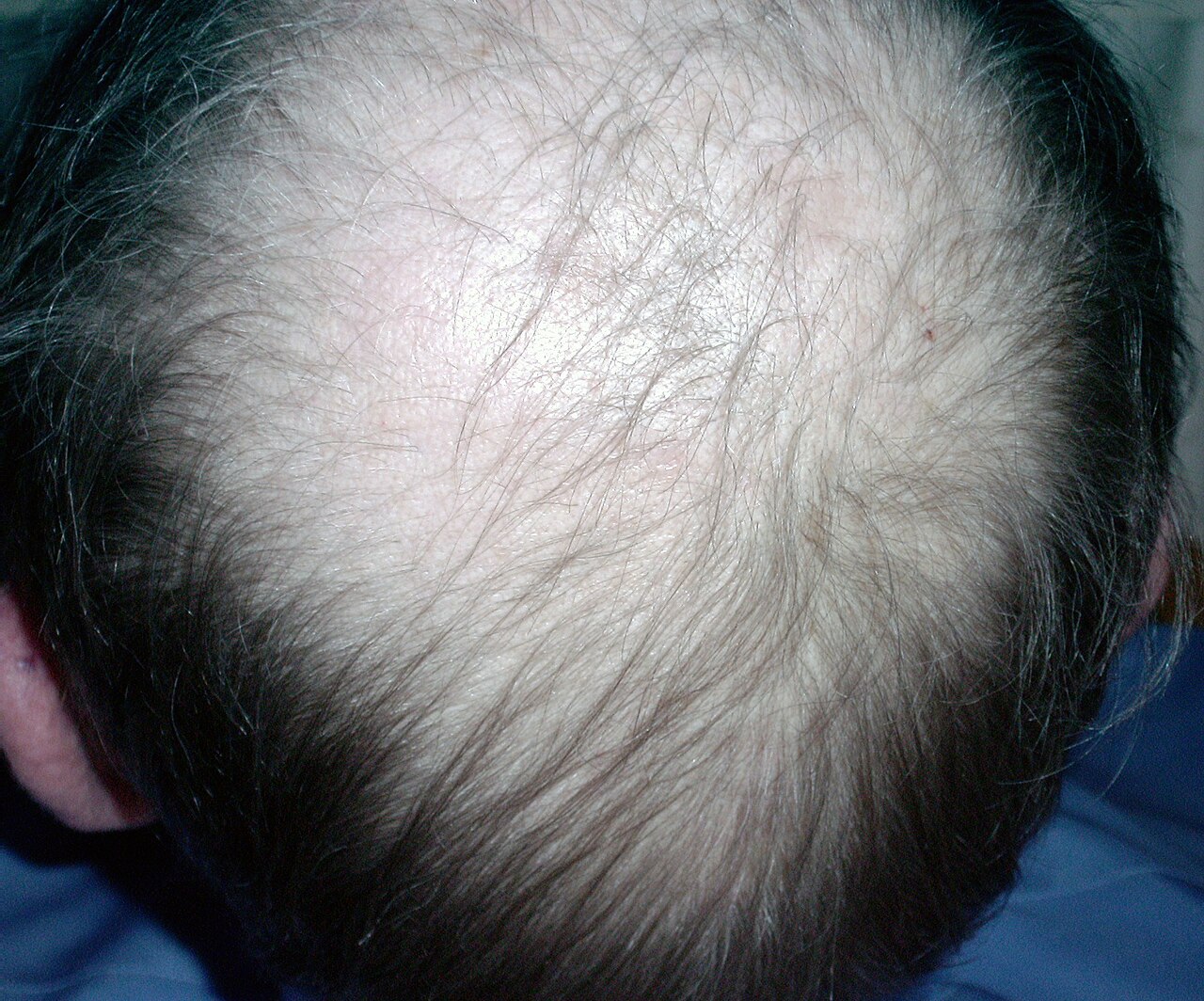
Norwood Scale: Why the Classification System Matters More Than People Realise

The Hamilton-Norwood scale, originally developed by James Hamilton in 1951 and modified by O'Tar Norwood in 1975, remains the standard classification system for male pattern hair loss. The scale defines seven progressive stages, from minimal frontal recession (Norwood 2) through complete vertex baldness with maintained frontal hair (Norwood 6) to bilateral connection of frontal and vertex baldness (Norwood 7). Modified versions add 'A' variants for patients with more anterior progression patterns.
The clinical relevance goes beyond academic classification. Treatment decisions depend on accurate staging: Norwood 2 to 3 patients are typically excellent medical therapy candidates, with regrowth potential from minoxidil and finasteride. Norwood 4 to 5 patients often benefit from combination medical therapy plus possible hair transplantation. Norwood 6 to 7 patients face donor area limitations that constrain transplant outcomes and may benefit more from scalp micropigmentation or hair systems than from transplants.
Self-staging tends to underestimate progression. Most patients believe they're a stage less advanced than dermatologists rate them. Visual reference charts help, but consultation with an experienced hair loss specialist provides the most reliable staging assessment. The Ludwig scale serves the equivalent function for female pattern hair loss, with three stages of progression from frontal/parietal thinning through diffuse central pattern loss. Sinclair's 5-point scale offers more granular female pattern classification adopted in recent clinical trials.
References & Clinical Data
- Male pattern baldness: classification and incidence , Norwood OT. (Southern Medical Journal, 1975)
- Patterned hair loss in men: a clinical study , Hamilton JB. (Annals of the New York Academy of Sciences, 1951)
- Classification of female pattern hair loss , Ludwig E. (British Journal of Dermatology, 1977)