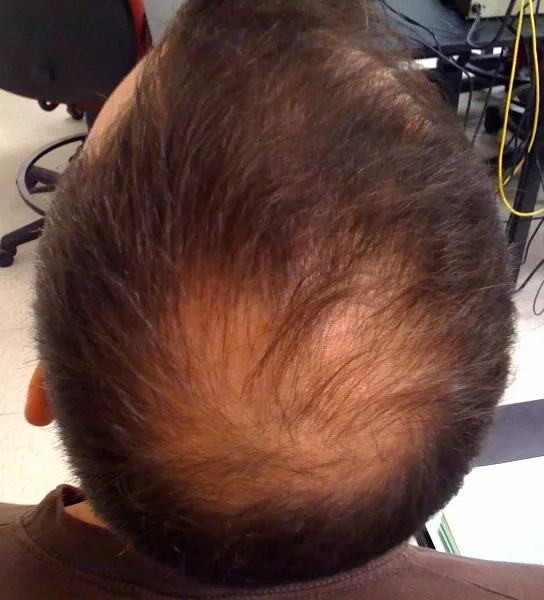
Lichen Planopilaris: The Scarring Alopecia Most Dermatologists Miss

Lichen planopilaris (LPP) is an inflammatory scarring alopecia that destroys hair follicles permanently. Unlike androgenetic alopecia, where follicles miniaturise but remain alive and theoretically recoverable, LPP causes immune-mediated destruction of the follicular stem cell niche. Once a follicle is destroyed, no current treatment can recover it. Early diagnosis is essential because treatment can only halt progression, not reverse damage already done.
The clinical presentation is often subtle in early stages. Patients describe itching, burning, or tenderness in patchy scalp areas, sometimes with visible perifollicular scaling and erythema around individual hairs. Diagnosis requires trichoscopy showing characteristic perifollicular scale and erythema, often confirmed by scalp biopsy showing lichenoid lymphocytic infiltrate at the follicular infundibulum. Many cases are misdiagnosed as androgenetic alopecia or seborrheic dermatitis for months or years before the scarring pattern becomes obvious.
Treatment focuses on suppressing the autoimmune attack. First-line therapy includes potent topical corticosteroids and intralesional steroid injections to active lesions. Hydroxychloroquine is the most commonly used systemic agent, with response rates of 50 to 70% for halting progression. Newer approaches include JAK inhibitors, both topical and systemic, which have shown promise in case series for refractory disease. The pace of research in scarring alopecias has accelerated significantly with the recognition of JAK pathway involvement.
References & Clinical Data
- Lichen planopilaris: clinical features, diagnosis and treatment , Kanti V, et al. (Journal of the American Academy of Dermatology, 2020)
- JAK inhibitors in lichen planopilaris: case series and review , Yang CC, et al. (JAMA Dermatology, 2023)
- Hydroxychloroquine for primary scarring alopecias: systematic review , Senna MM, Olsen EA. (Journal of the American Academy of Dermatology, 2021)