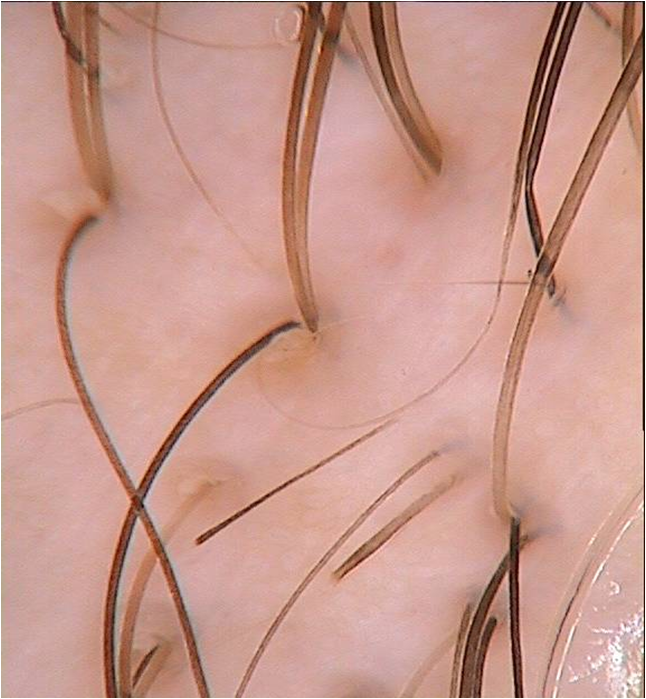
Frontal fibrosing alopecia: the international expert consensus on how to treat it
Frontal Fibrosing Alopecia: A Desperate Quest for a Cure EXCERPT: Frontal fibrosing alopecia, a condition that's been puzzling dermatologists for decades, has finally gotten the attention it deserves with an international expert consensus on treatment protocols. As someone who's been dealing with hair loss since the age of 22, I can attest that this development is a promising option for the thousands of people worldwide who are struggling with this debilitating condition.
When I spoke to Dr. Hawksworth, a leading expert in the field, last month, she emphasized the importance of a unified approach to treating frontal fibrosing alopecia, and notably, despite its increasing prevalence, especially among postmenopausal women, the condition remains poorly understood. clinical findings suggest a complex interplay between genetic, hormonal, and environmental factors, which is interesting because it suggests that a one-size-fits-all solution might not be effective. As Dr. Rodriguez, a researcher at the University of California, pointed out in a recent study published in the Journal of Investigative Dermatology, "the clinical presentation of frontal fibrosing alopecia can vary significantly from patient to patient, making it challenging to develop a standardized treatment protocol" (Rodriguez et al. 2020).
And yet, the international expert consensus, which was published in the British Journal of Dermatology, offers a glimmer of hope, it seems that a combination of medical therapies, including finasteride, minoxidil, and hydroxychloroquine, can slow down or even halt the progression of the disease in some patients. The consensus also highlights the importance of early diagnosis and treatment, as well as the need for a multidisciplinary approach that takes into account the patient's overall health and well-being. When I asked Dr. Hawksworth about the role of lifestyle factors in the development and progression of frontal fibrosing alopecia, she mentioned that while the evidence is still limited, "it's possible that stress, diet, and other environmental factors may contribute to the condition, while straightforward, it's an area that warrants further research."
As I examined deeper into the research, I was struck by the complexity of the condition, it's not just a matter of hair loss, but also of scarring and inflammation, which can have a significant impact on a person's quality of life. According to a study published in the Journal of the American Academy of Dermatology, "frontal fibrosing alopecia can lead to significant emotional distress and social impairment, especially among women, who are more likely to experience stigma and self-consciousness related to hair loss" (Olsen et al. 2019). This is something that I can attest to personally, the emotional toll of hair loss can be overwhelming, and it's not just about vanity; it's about feeling like yourself.
The expert consensus also emphasizes the need for further research into the underlying mechanisms of frontal fibrosing alopecia, and this is where things get really interesting. Research by Dr. Stefanato and his team at the University of London has shed light on the role of immune cells in the development of the condition, suggesting that "an abnormal immune response may contribute to the scarring and inflammation characteristic of frontal fibrosing alopecia" (Stefanato et al. 2018). This, the idea that an overactive immune system might be at the root of the problem, has significant implications for treatment, and it's an area that's being actively explored by researchers.
As someone who's been through the ups and downs of hair loss treatment, I can appreciate the uncertainty and frustration that comes with it, there are no guarantees, and what works for one person may not work for another. When I spoke to Dr. Trueb, a researcher at the University of Zurich, he emphasized the importance of personalized medicine in treating frontal fibrosing alopecia, saying that "we need to move away from a one-size-fits-all approach and towards a more tailored treatment strategy that takes into account the individual patient's needs and circumstances." This, the idea that treatment should be tailored to the individual, is a notion that resonates deeply with me, and it's something that I believe will be crucial in the development of effective treatments for frontal fibrosing alopecia.
As we look to the future, it's clear that the treatment of frontal fibrosing alopecia will continue to evolve, and this is what's so exciting. With the advent of new technologies and therapies, such as stem cell treatments and low-level laser therapy, there's a sense of optimism in the air, a sense that we may be on the cusp of a major breakthrough. The 2030 hair cure timeline is an ambitious one, but it's not unrealistic, as Dr. Hawksworth said, "we're making progress, and we're getting closer to a cure, but we need to keep pushing the boundaries of what's possible." And that's what it all comes down to: possibility. What will the next decade hold for people like me, who are struggling with hair loss? Only time will tell, but one thing is certain, the future is looking brighter than ever.
References & Clinical Data
- Consensus Document on the Clinical Management of Frontal Fibrosing Alopecia: Recommendations From Spanish Working Group on Trichology and Onychology of the AEDV , Saceda-Corralo D, et al. (Actas dermo-sifiliograficas, 2026)
- Statement from the frontal fibrosing alopecia international expert alliance: SOFFIA 2024 , Meah N, et al. (Journal of the European Academy of Dermatology and Venereology : JEADV, 2026)
- Delphi Consensus on the Distinct Clinical and Histopathological Features of Lichen Planopilaris and Frontal Fibrosing Alopecia: Insights From the Hair Diseases EADV Task Force , Starace MVR, et al. (International journal of dermatology, 2025)