Frontal Fibrosing Alopecia: The Mysterious Epidemic Affecting Postmenopausal Women

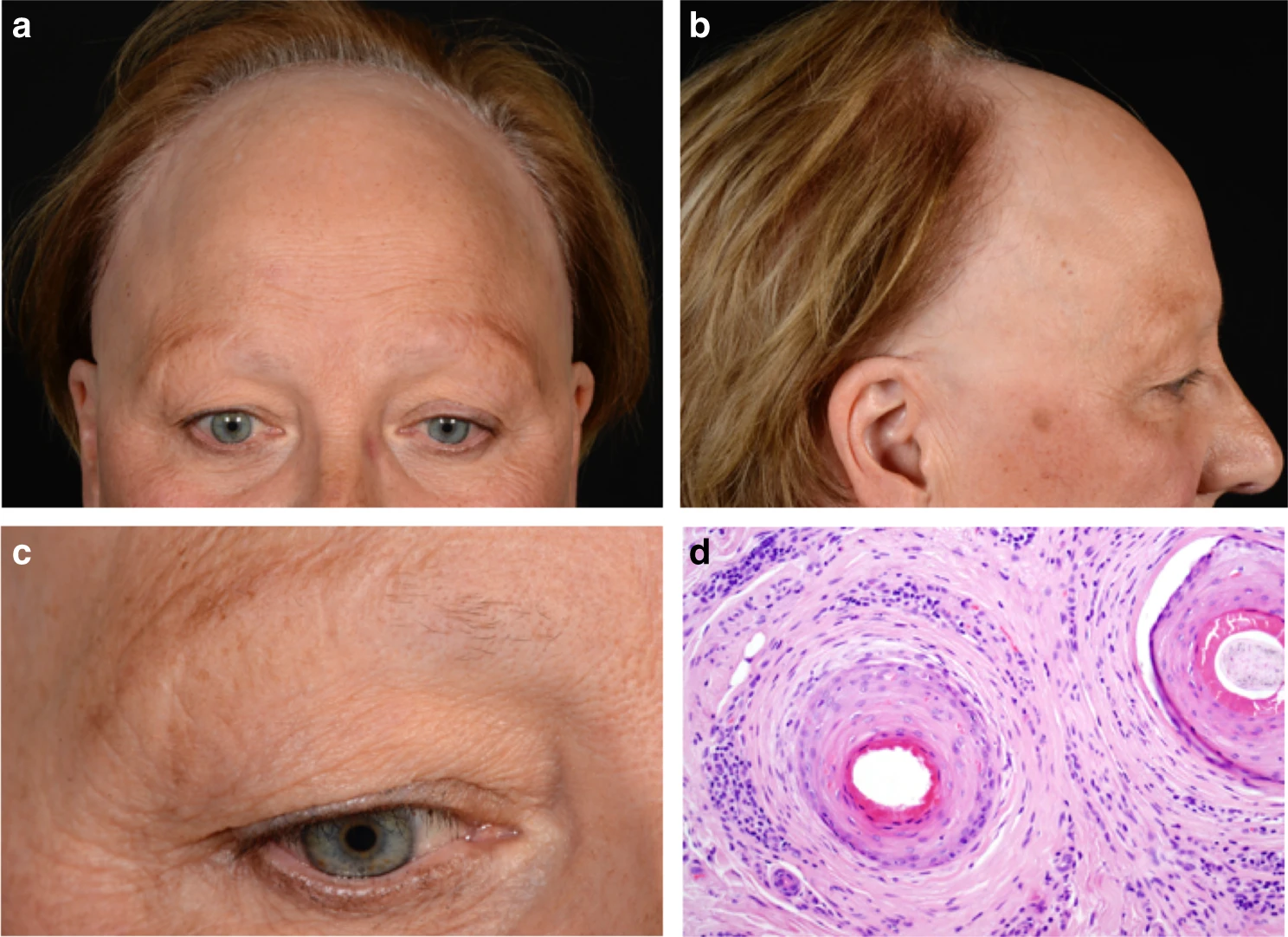
Frontal fibrosing alopecia (FFA) is a peculiar diagnosis in dermatology, it barely existed before the 1990s, and now it's one of the most common scarring alopecias seen in dermatology clinics. The condition causes progressive band-like hair loss along the frontal hairline, often with associated eyebrow loss and facial papules. It overwhelmingly affects postmenopausal women, with a substantial proportion having a history of leave-on cosmetic use.
The epidemiological rise has prompted serious investigation of environmental triggers. A 2018 case-control study in the British Journal of Dermatology found a statistically significant association between FFA and leave-on facial sunscreen use, a finding that has since been replicated in multiple cohorts though without establishing causation. Other proposed contributors include hormonal changes of menopause and possibly genetic susceptibility, with HLA-B*07:02 emerging as a risk allele in several studies.
Treatment combines suppression of the active inflammatory component (topical and intralesional corticosteroids, hydroxychloroquine, sometimes oral retinoids) with measures to address the androgenetic component that often co-exists (5-alpha reductase inhibitors). Outcomes vary widely, some patients achieve disease stabilisation, others progress despite treatment. The fact that the hairline recession can be permanent makes early dermatology referral essential when subtle frontal scalloping appears.
References & Clinical Data
- Frontal fibrosing alopecia: a clinical and epidemiological review , Vañó-Galván S, et al. (Journal of the American Academy of Dermatology, 2019)
- Facial sunscreen and frontal fibrosing alopecia: case-control study , Aldoori N, et al. (British Journal of Dermatology, 2016)
- Genetic susceptibility loci in frontal fibrosing alopecia , Tziotzios C, et al. (Nature Communications, 2019)