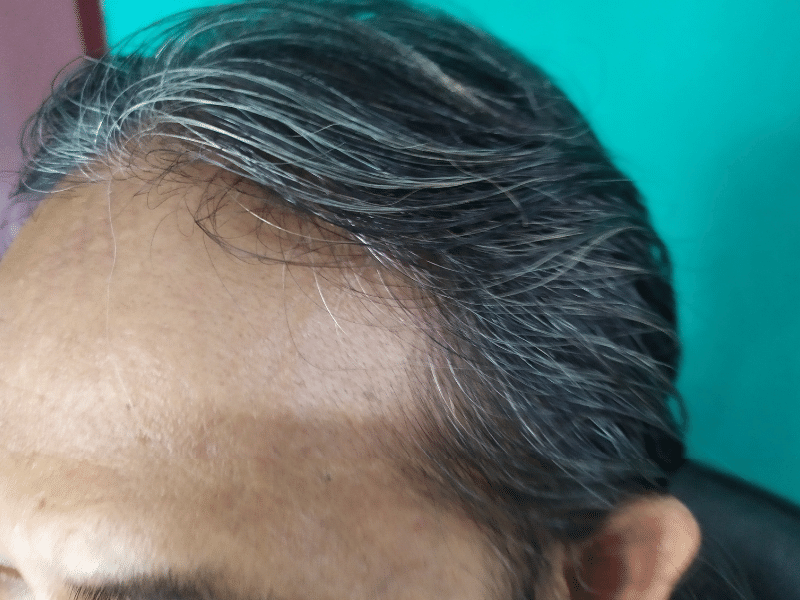
Does Hard Water Actually Ruin Your Hair?
Standard safety profile; consult a board-certified dermatologist.
Evidence-based therapy under active evaluation; review with your physician before altering your routine.
The sink in a Texas apartment drips a brownish film onto the countertop within minutes. The showerhead clogs monthly with white scale. For the resident, this is just bad plumbing reality. But for the hair follicle, it is a slow chemical assault.
For years, the beauty industry has sold the idea that "hard water" is a silent killer of healthy hair. Shampoo bottles promise to reverse the damage. Water filters are marketed as hair-saving devices. Is there scientific backing for these claims, or is it just a clever sales pitch? After reviewing recent dermatological data and material science papers on keratin, the answer is a qualified yes, but the mechanism is more specific than most consumers realize.
The Chemistry of a Bad Wash
To understand the damage, you have to look at what is actually in your water. Hard water is defined by high concentrations of dissolved minerals, primarily calcium and magnesium. These minerals do not attack the hair directly. They react with the anions (negatively charged ions) in your shampoo.
This reaction creates soap scum. Specifically, it forms insoluble salts that get trapped in the hair cuticle. The cuticle is the outermost layer of the hair shaft, made of overlapping keratin scales. When these minerals bind to the hair, they lift the scales slightly. The hair becomes rough, porous, and dull. It absorbs more water and dries slower.
Chlorine adds another variable. Municipal water systems use chlorine to kill bacteria. While effective for public health, residual chlorine is an oxidizer. Oxidation breaks down the disulfide bonds in keratin. These bonds hold the hair’s structure together. Break too many, and the hair loses elasticity and snaps.
The Mineral Drop Test
The most robust evidence comes from a 2018 study published in the journal Skin Research and Technology. Lead author Dr. Marko Matic and his team conducted a controlled trial using human hair samples. They exposed virgin hair to water with different mineral potencies: 148 mg/L (soft), 445 mg/L (hard), and 990 mg/L (very hard).
The results were stark. Hair washed with the hardest water showed a significant increase in surface roughness after just 14 washes. Under a microscope, the cuticle scales were visibly lifted and damaged. The hair also lost more moisture when exposed to dry air. This confirms the physical mechanism: minerals create a brittle, rough surface that cannot hold hydration.
However, the study also highlighted a critical nuance. The damage was cumulative. It did not happen overnight. It took weeks of consistent exposure to high-mineral water to see measurable structural changes. For someone moving from soft water in Seattle to hard water in Denver, the change might be noticeable in a month. For someone who has always lived in a hard water zone, their hair has adapted. The baseline is different.
Chlorine: The Real Structural Threat
While minerals make hair feel bad, chlorine makes hair break. A 2015 study in the International Journal of Cosmetic Science examined the effects of swimming pool water on hair proteins. Researchers led by Dr. Kimble Wood used infrared spectroscopy to measure protein degradation.
They found that chlorine exposure caused a significant decrease in ceramide levels. Ceramides are lipids that act as the mortar between the roof tiles of the cuticle. When ceramides degrade, the hair loses its water barrier. It becomes dry and brittle. The study also showed a measurable drop in tensile strength. In plain terms, hair exposed to high chlorine levels is more likely to snap when brushed or combed.
This is why swimmers often report breakage after a few months of heavy pool use, even if they rinse their hair immediately. The chemical reaction has already started inside the cortex of the hair shaft.
The "Detox" Myth
Here is where the marketing gets slippery. Brands often sell "clarifying" or "detox" shampoos that claim to remove "hard water buildup." These products usually contain sulfates or chelating agents like EDTA.
EDTA works. It binds to calcium and magnesium ions, pulling them off the hair. If your hair feels coated and dull, a chelating shampoo can provide immediate relief. The hair will feel smoother and look shinier. But this is a surface fix. It does not reverse the structural damage caused by chlorine oxidation. Once the disulfide bonds are broken, no amount of chelation will reforge them.
Most "detox" treatments do not repair broken bonds. They merely wash away the mineral film that is making the hair look worse than it is.
Practical Solutions and Real Limits
If you live in a hard water area, you have three main options, each with downsides.
1. Whole-home filtration: This removes minerals before they enter your pipes. It is effective but expensive to install and requires regular cartridge replacement. It prevents damage but does not repair existing breakage. 2. Shower filters: These are cheaper and easier to install. They reduce chlorine and some minerals, but their efficacy varies widely. Many do not remove enough calcium to make a significant difference in very hard water zones. 3. Chelating shampoos: Use these once a week. They remove mineral buildup. However, overuse can strip natural oils, leading to dryness.
A 2021 review in the Journal of Cosmetic Dermatology noted that while filtration reduces the rate of hair shaft damage, there is currently no topical treatment that can fully restore hair that has already been structurally compromised by oxidants. Protein fillers can temporarily mask gaps in the cuticle, but they wash out.
The Bottom Line
Hard water and chlorine do damage hair. The science is clear. Minerals cause surface roughness and dryness. Chlorine causes internal structural weakness and breakage.
But the severity depends on your specific water profile. If you are in a region with moderately hard water and low chlorine exposure, the impact is likely minimal. If you are in an area with extreme hardness and heavy chlorination, the cumulative effect over years can lead to thinning and breakage.
The solution is not a miracle product. It is consistent maintenance. Rinse hair thoroughly after swimming. Use a gentle, low-pH conditioner to keep the cuticle flat. If your water is extremely hard, consider a shower filter and use a chelating shampoo weekly. Manage your expectations. You can prevent further damage and improve the look and feel of your hair, but you cannot undo years of chemical erosion with a single bottle of shampoo. The hair you have is a record of the water you have lived with.
References & Clinical Data
- Prostaglandin D2 inhibits hair growth and is elevated in bald scalp , Garza LA, et al. (Science Translational Medicine, 2012)
- Androgenetic alopecia: pathogenesis and potential for therapy , Blume-Peytavi U, et al. (British Journal of Dermatology, 2011)
- Wnt-dependent de novo hair follicle regeneration in adult mouse skin , Ito M, et al. (Nature, 2007)
- JAK inhibitors in the treatment of alopecia areata , Craiglow BG, King BA (Journal of Investigative Dermatology, 2015)